How to Respond to Negative Reviews (Templates and Examples)
Updated
On this page
- Why responding to negative reviews matters
- The 5-step framework for responding to a negative review
- 1. Respond quickly, but not reactively
- 2. Thank them and acknowledge the specific concern
- 3. Apologize sincerely, without excuses
- 4. Offer a concrete next step
- 5. Take it offline
- Negative review response templates
- Generic disappointing experience
- Product defect or quality issue
- Long wait or slow service
- Shipping or delivery problem
- Billing or pricing complaint
- When the customer is partly mistaken
- Phrases to avoid in any negative review response
- Good response vs bad response: a side by side
- How fast should you respond to a negative review?
- What about fake or unfair reviews?
- Turn a negative review into a win
- How to reduce negative reviews before they happen
- The best defense: a steady stream of positive reviews
- Frequently asked questions
- Should I respond to every negative review?
- How do I respond to a negative review professionally?
- Can I get a fake or unfair review removed?
- Will a negative review hurt my Google ranking?
- Should I ask a customer to update their review after I fix the proble…
The first instinct when a one-star review lands is to defend yourself. Resist it. A negative review is not really a conversation with one unhappy customer; it is a performance in front of every future customer who reads it. Handled well, a calm, helpful reply can build more trust than a wall of five-star ratings ever could.
Quick answer: To respond to a negative review, reply promptly, thank the reviewer, acknowledge their specific concern, apologize sincerely without making excuses, briefly explain how you will fix it, and offer to continue the conversation offline. Stay calm and professional, never argue, and keep it short. Future readers, not the angry reviewer, are your real audience.
This guide gives you a repeatable framework, situation-by-situation templates, the exact phrases to avoid, and a plan to make negative reviews rare in the first place. For the positive side of review management, pair it with our guide on how to ask for a review.
Why responding to negative reviews matters
Ignoring a bad review feels safer than engaging, but silence is the costliest response of all. Here is what a thoughtful reply actually does.
- It reassures future customers. Most people read the negative reviews first to see how a business reacts under pressure. A measured, helpful response often matters more than the complaint itself.
- It can recover the customer. Many unhappy customers will revise or remove a review when they feel genuinely heard and the issue is resolved.
- It supports your SEO. Responses add fresh, relevant text to your profile and signal an active, engaged business, something we cover in how Google reviews impact your local SEO.
- It shows your standards. How you handle a complaint is a public demonstration of your customer service, visible to everyone considering you.
The math is sobering: a single bad review can outweigh many good ones in a buyer's mind, and undoing that impression takes far more positive reviews than you would expect. That is exactly why the response, and a steady base of positive reviews, matters so much.
The 5-step framework for responding to a negative review
Run every reply through these five steps. They keep you calm, consistent, and on the right side of the reader.
1. Respond quickly, but not reactively
Aim to reply within 24 to 48 hours, while the issue is visible and fresh. But never fire back in anger. If a review makes your blood boil, draft your response, step away, and reread it an hour later. Speed matters; so does composure.
2. Thank them and acknowledge the specific concern
Open by thanking the reviewer for the feedback and naming the actual problem they raised. “Thank you for letting us know about the long wait on Saturday” shows you read it. A generic “sorry for any inconvenience” shows you did not.
3. Apologize sincerely, without excuses
A real apology takes responsibility. “You are right that this fell short of our standard, and I am sorry” lands far better than “we are sorry you feel that way,” which reads as blame. Skip the justifications; nobody reading is persuaded by your reasons.
4. Offer a concrete next step
Briefly say what you will do or what you would like to do to make it right: a refund, a redo, a conversation. You do not need to resolve everything publicly; you need to show that resolution is on offer.
5. Take it offline
Invite the reviewer to continue privately with a name and a direct contact. “I would love to make this right, please email me at [name and address].” This protects private details, prevents a public back-and-forth, and shows readers you are genuinely trying to help.
Negative review response templates
Adapt these to your voice and the specific situation. Keep them short, specific, and free of defensiveness.
Generic disappointing experience
“Hi [First name], thank you for taking the time to share this, and I am sorry your experience did not meet the standard we aim for. You raised a fair point about [specific issue], and I would like to understand what happened and make it right. Could you email me directly at [name, email]? I will personally look into it.”
Product defect or quality issue
“Hi [First name], I am sorry the [product] arrived [defect]. That is not the quality we stand behind, and we will replace it right away. I have sent you a message to arrange a replacement or full refund, whichever you prefer. Thank you for flagging it so we can do better.”
Long wait or slow service
“Hi [First name], you are right that the wait on [day] was too long, and I am sorry it affected your visit. We were short-staffed, but that is on us to manage, not your problem to absorb. We have adjusted our scheduling for busy periods. I would love to welcome you back, please reach out to me at [contact] and the next [service] is on us.”
Shipping or delivery problem
“Hi [First name], I am sorry your order arrived [late or damaged]. That is frustrating and not the experience we want. We are looking into what went wrong with the carrier, and in the meantime I have arranged [a replacement or refund]. Please check your email so we can sort this out quickly.”
Billing or pricing complaint
“Hi [First name], thank you for raising this, and I am sorry the charge was not clear. I want to review your account personally and fix anything that is not right. Could you email me at [contact] with your details? I will get back to you the same day.”
When the customer is partly mistaken
“Hi [First name], I appreciate you sharing this and I am sorry for the frustration. Looking into it, it seems there may have been a mix-up around [issue], and I would genuinely like to walk through it with you and find a fair resolution. Please reach me at [contact]. We want to get this right.”
Notice that even when the customer may be wrong, the reply never says so publicly. You correct the record gently and privately, because the audience is everyone else reading along.
Phrases to avoid in any negative review response
Certain words turn a recoverable situation into a worse one. Steer clear of these:
- “We are sorry you feel that way.” A non-apology that shifts blame to the customer.
- “As stated in our policy...” Hiding behind rules reads as cold and defensive.
- “That never happens” or “You must be mistaken.” Calling the customer a liar in public is fatal.
- “Actually...” Anything that starts an argument loses the room.
- Sarcasm or humor at the customer's expense. It always reads worse than you intend.
- Copy-paste replies. Identical responses to different complaints signal you are not really listening.
Good response vs bad response: a side by side
The same complaint can be met two ways. The difference decides what every future reader thinks of you. Imagine a review that says the food was cold and the server seemed rushed.
Bad: “We are sorry you feel that way. Our kitchen was busy and our staff work very hard. As stated on our site, we do our best during peak hours.”
Good: “Hi [First name], thank you for telling us, and I am sorry the food arrived cold and the service felt rushed. That is not the experience we want anyone to have. I have spoken with the team about pacing on busy nights. I would genuinely like to make it up to you, please email me at [contact] and your next meal is on us.”
The bad reply argues, excuses, and blames. The good one acknowledges, owns it, fixes it, and takes it offline. A reader comparing two restaurants will choose the second every time, even with the identical complaint on the page.
How fast should you respond to a negative review?
Within a day or two is the sweet spot. Fast enough that the reviewer feels heard and future readers see you are attentive, but not so instant that you reply while emotions are high. For serious complaints, a quick holding response (“Thank you for this, I am looking into it now and will follow up directly”) buys you time to investigate without leaving the review unanswered.
What about fake or unfair reviews?
Not every negative review is legitimate. If a review is fake, violates platform policies, or comes from someone who was never a customer, most platforms let you flag it for removal. Report it through the proper channel, but do not count on a fast result. In the meantime, respond publicly and professionally: “We take this seriously but have no record of a transaction matching this. Please contact us at [email] so we can look into it.” This signals to readers that you are responsive and that the review may not be what it seems, without accusing anyone outright.
Turn a negative review into a win
The goal is not just damage control; it is recovery. After you respond publicly and resolve the issue privately, close the loop. Once a customer is satisfied, it is completely appropriate to say: “I am so glad we sorted this out. If you feel comfortable updating your review to reflect how it was resolved, it would mean a lot, but no pressure either way.” Many customers will update or remove a review when they feel genuinely taken care of. A complaint that becomes a public story of a problem solved can be more convincing than a review that never had a hiccup at all.
How to reduce negative reviews before they happen
The best response strategy is needing it less often. Most negative reviews are preventable with a little proactive listening:
- Open a private feedback channel. Ask for feedback directly, by email or a quick survey, before customers feel they have to go public. Many frustrations get resolved quietly when there is an easy place to raise them.
- Catch problems at the peak moment. A short check-in right after a purchase or service surfaces issues while you can still fix them.
- Set accurate expectations. A surprising number of bad reviews come from a mismatch between what was promised and what was delivered. Honest descriptions and timelines prevent disappointment.
- Act on patterns. If the same complaint keeps appearing, the fix is operational, not a better-worded reply. Treat recurring feedback as a to-do list.
Giving customers an easy, private way to tell you what went wrong is one of the most effective ways to keep complaints off public profiles. Our list of customer feedback questions is a good starting point for that channel.
The best defense: a steady stream of positive reviews
The single most effective way to blunt the impact of a negative review is to make sure it is surrounded by recent, genuine positive ones. One critical review among five looks alarming; among two hundred, it looks like normal life. A healthy, active review profile is your insurance policy.
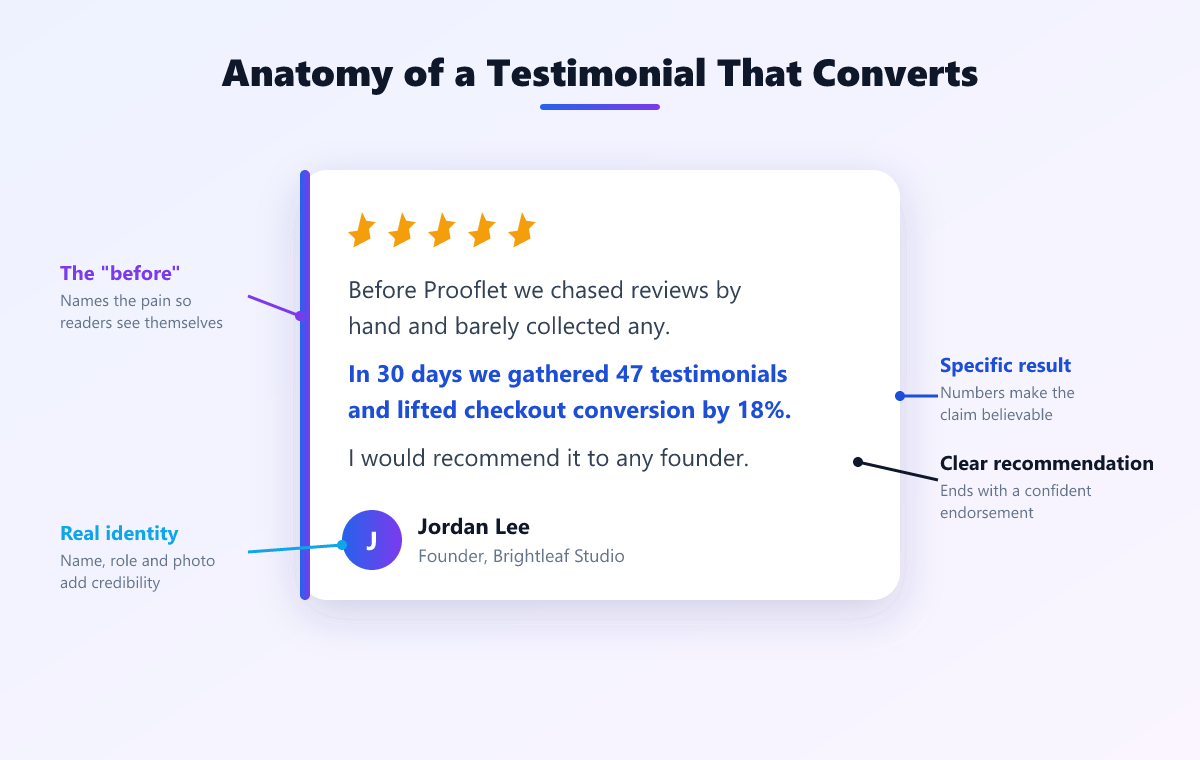
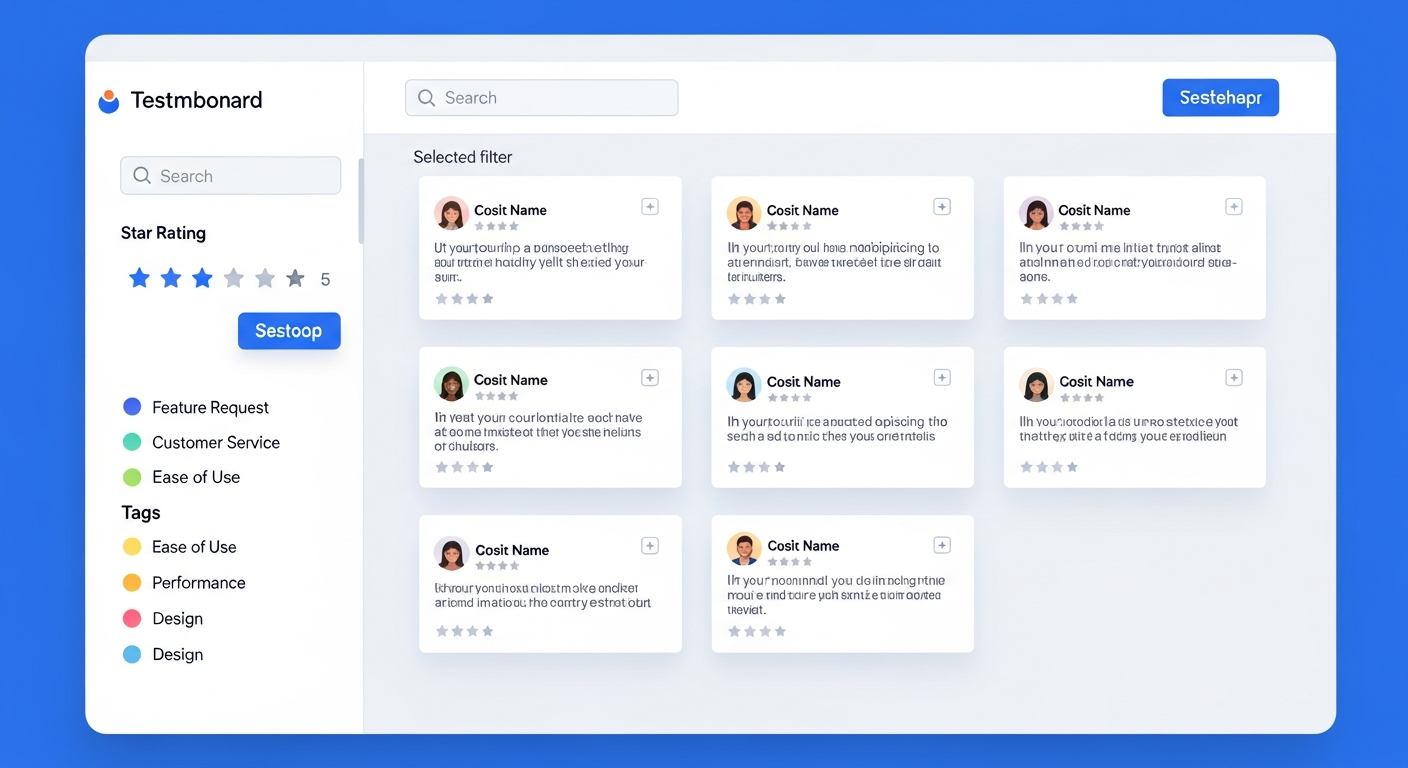
That is where a consistent collection habit pays off, and where Prooflet helps. You can automatically request reviews and testimonials at the right moment, let customers respond with a written quote or a video testimonial, and publish your best ones as a Wall of Love or embeddable widget on your site. Collecting and storing your own copy of customer feedback also protects you if a platform ever filters or removes reviews. To build the habit, see our guides on how to get customer testimonials and the good review examples worth aiming for. And to spread your reputation across the platforms that matter, our roundup of the best customer review sites by industry shows where to focus.
Negative reviews are not the end of the world. They are a chance to prove, in public, that you are the kind of business that listens, owns its mistakes, and makes things right. Handle them with that mindset and they become one of the most persuasive things on your profile.
Frequently asked questions
Should I respond to every negative review?
Yes. Responding to every negative review shows future customers that you listen and take problems seriously, and it gives you a chance to recover the relationship. Silence reads as indifference and lets the complaint stand unchallenged for everyone who reads it later.
How do I respond to a negative review professionally?
Reply within a day or two, thank the reviewer, acknowledge the specific issue, apologize sincerely without excuses, offer a concrete next step, and invite them to continue privately. Stay calm, keep it short, and never argue, because your real audience is every future customer reading the exchange.
Can I get a fake or unfair review removed?
Sometimes. If a review violates a platform's policies, is fake, or comes from a non-customer, you can flag it for removal through the platform, though approval is not guaranteed or fast. In the meantime, respond professionally and factually so readers see your side without you accusing anyone outright.
Will a negative review hurt my Google ranking?
A few negative reviews rarely hurt and can even build trust by making your profile look authentic, especially when you respond well. What harms visibility is a low overall rating, no recent reviews, or ignoring complaints. A steady flow of positive reviews and thoughtful responses keeps your reputation and ranking healthy.
Should I ask a customer to update their review after I fix the problem?
Yes, politely and without pressure. Once the issue is genuinely resolved, it is appropriate to invite the customer to update their review to reflect the outcome. Many will, because they felt heard. Never demand it or condition the fix on a changed rating.
For the wider set, including positive and mixed feedback, see our thank you for your feedback response templates.