
Prooflet Blog: Testimonial and Review Guides
Practical guides on collecting, displaying, and getting more out of customer testimonials. Templates, prompts, and comparisons that work.
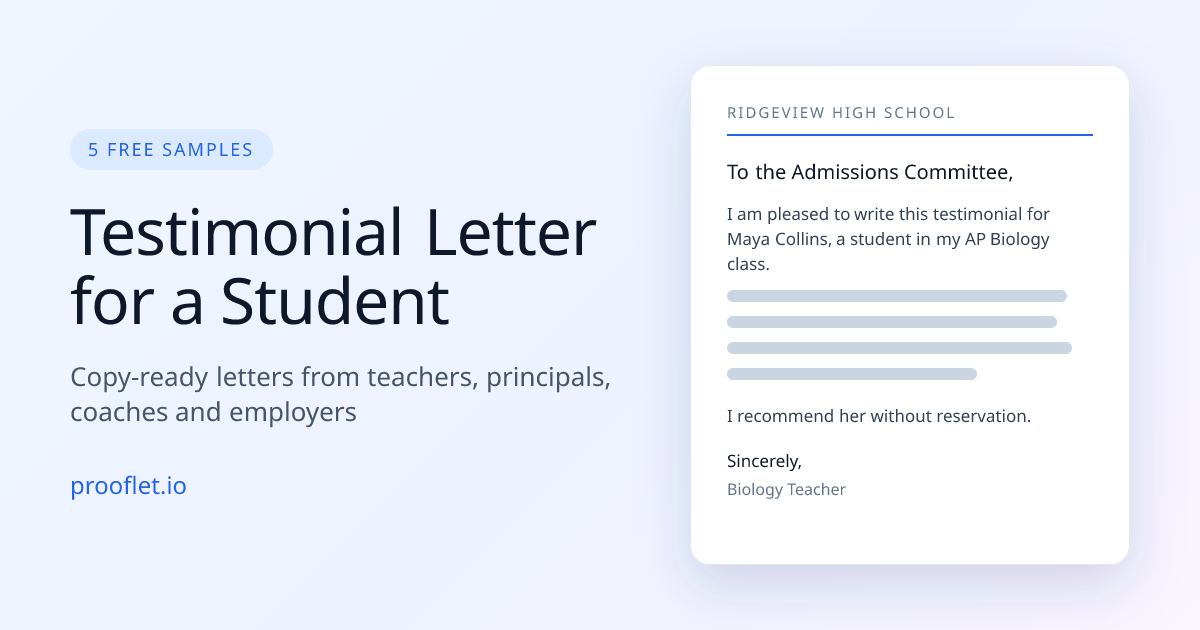
Testimonial Letter for a Student: 5 Samples You Can Copy
A testimonial letter for a student is a short, signed letter in which a teacher, principal, coach or employer vouches for a student's character, effort and abilities. Five samples you can copy for college, scholarships and jobs.
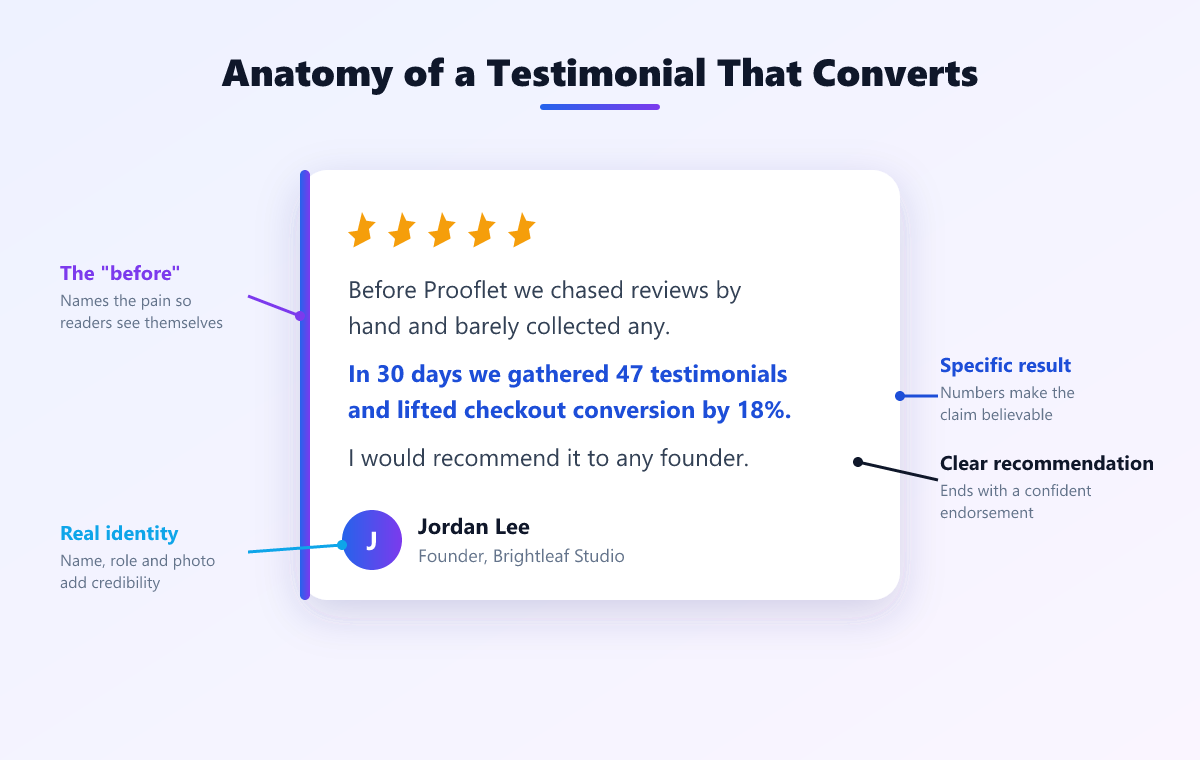
What Makes a Good Testimonial? The 3 Rules (And Best Format)
A testimonial needs three things to work: it must be specific, attributed to a named person, and focused on a result. The 5-part format and ideal length for each type.
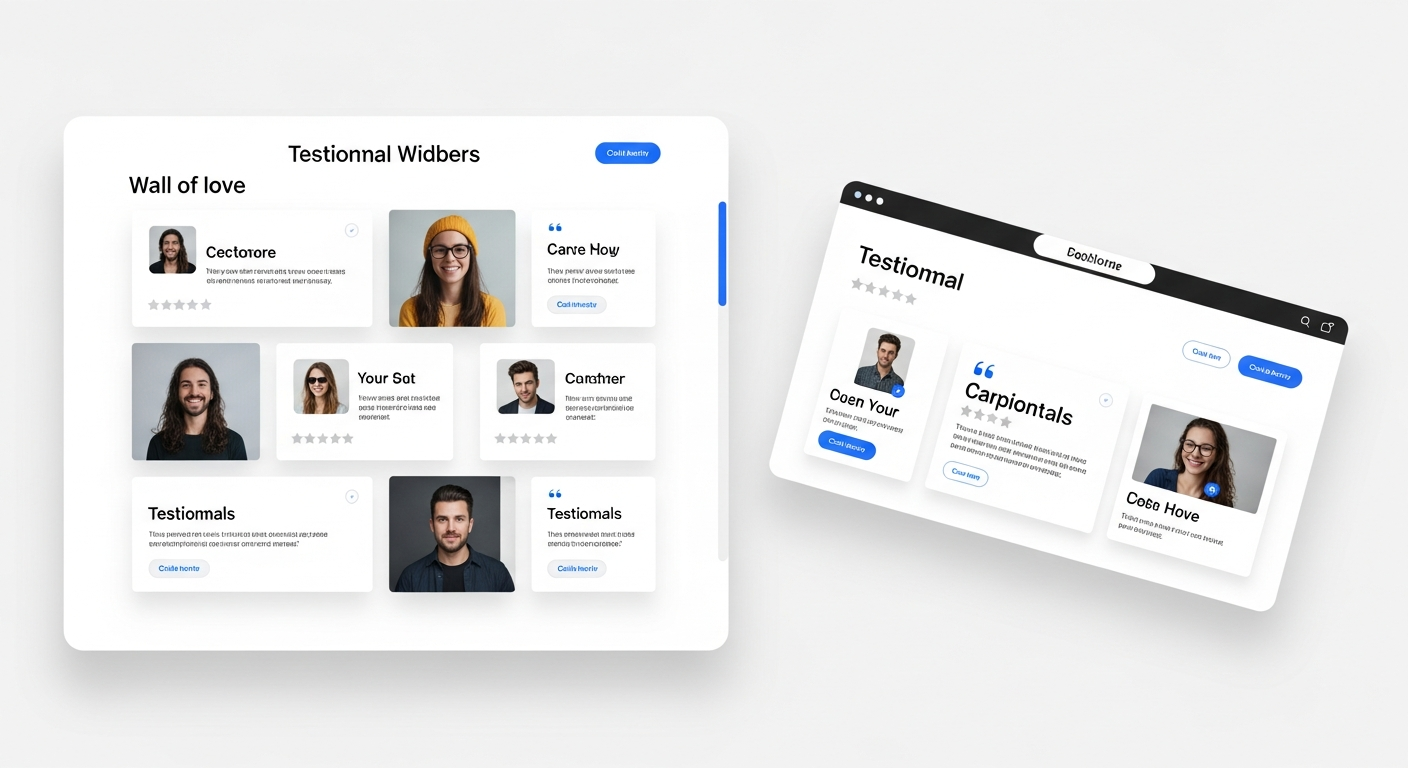
45 Short Testimonial Examples (Under 25 Words Each)
A short testimonial names one specific result in under 25 words. 45 examples about a person (coworker, friend, teacher, coach, manager, freelancer) and a business, plus the formula behind them.

20 Testimonial Sentence Examples You Can Copy
A testimonial sentence names one result in one line. 20 examples you can adapt across 10 industries, plus weak vs strong versions.

12 Employee Testimonial Examples (And the 5-Part Structure)
An employee testimonial needs five parts: role, tenure, one specific moment, what changed, and who they would recommend it to. 12 examples for employer branding.
14 Testimonial Ad Examples That Actually Convert
A testimonial ad puts the customer's words at the centre. 14 examples across paid social, display and video, and the 4 elements they share.
Are Fake Testimonials Illegal? Yes: The FTC Rule's 6 Banned Practices
Yes. Since October 21, 2024, the FTC's rule bans fake testimonials, including AI-generated ones, on your own website as well as review sites. The 6 banned practices explained.
Testimonial Design: 15 Layouts That Convert (+ Free Templates)
Testimonial design comes down to four layout families: card grid, carousel, hero quote, and video wall. 15 live examples, the anatomy of a converting card, and free HTML and CSS templates.
How to Write a Testimonial (Format, Template + 10 Examples)
A good testimonial names the problem, the change, and one measurable result in 40 to 80 words. A copy-paste template plus 10 filled examples for products, services, colleagues, and employees.

Testimonial Letter Sample: 8 Free Templates for Employees, Students and Jobs
A testimonial letter vouches for a person's character, skills, or work. Eight copy-paste samples: employee, student, job, business, coworker, volunteer, student exchange and tenant.
Testimonials on Your Website: Where to Put Them (12 Examples)
Testimonials work hardest below the homepage hero, beside the price, and next to the submit button. How many to show on each page, which format to use, and 12 placement examples.

How to Collect Video Testimonials: The 3-Part Structure, 4 Questions and Examples
How to collect video testimonials that convert: the three-beat structure, the questions to ask, what equipment you actually need, and where to place them.

Testimonial Collection Forms: 5 Templates That Get Completed (2026)
How to build a testimonial collection form that customers actually finish: the prompts that produce specific answers, five templates to copy, and the consent rules to follow.
Thank You for Your Feedback: 15 Response Templates That Work (2026)
15 copy-and-paste templates for responding to positive, negative, and mixed customer feedback, plus the follow-ups that turn feedback into testimonials.

How to Embed Google Reviews on Your Website
Three ways to embed Google reviews on your website, compared on setup, cost, and page speed: import into a testimonial tool, use the Google Places API, or install a display widget. With the rules to follow and the five-review limit nobody warns you about.
50 Testimonial Examples (Client, Customer & Business) to Copy
Good testimonials share three traits: a specific problem, a measurable result, and a named person. 50 copyable examples for clients, customers and businesses.
How to Respond to Negative Reviews: 15 Templates That Work
Reply fast, name the problem, apologize without excuses, and take the fix offline. A simple 4-step method and 15 copy-ready replies for negative reviews.
Good Review Examples and Templates for Every Industry
What does a genuinely persuasive review look like? Here are real-world examples across industries, what makes each work, and templates to collect and respond to them.
How Google Reviews Impact Your Local SEO (and How to Use Them)
Google reviews are not just social proof. They are a direct ranking signal for local search. Here is how they work and how to turn them into visibility.

The Best Customer Review Sites by Industry: A Complete 2026 Guide
Not every review site is worth your time. Here are the platforms that actually move trust and sales, organized by industry, with how to choose and where to focus.
How to Ask for a Review: 10 Templates That Work (2026)
Most customers are happy to leave a review. They just need a clear, well-timed ask. Here is exactly when and how to request one, with copy-paste templates.
How to Get Customer Testimonials: 9 Methods That Work
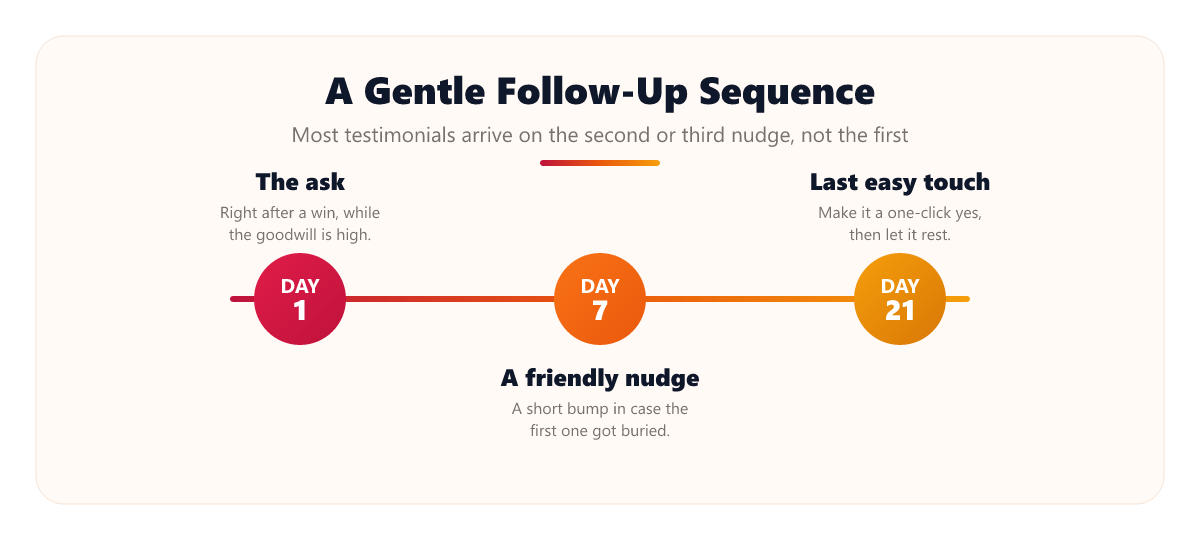
Most happy customers will gladly vouch for you, if you make it easy. Here are 9 methods to get customer testimonials, with timing and follow-up tips that work.
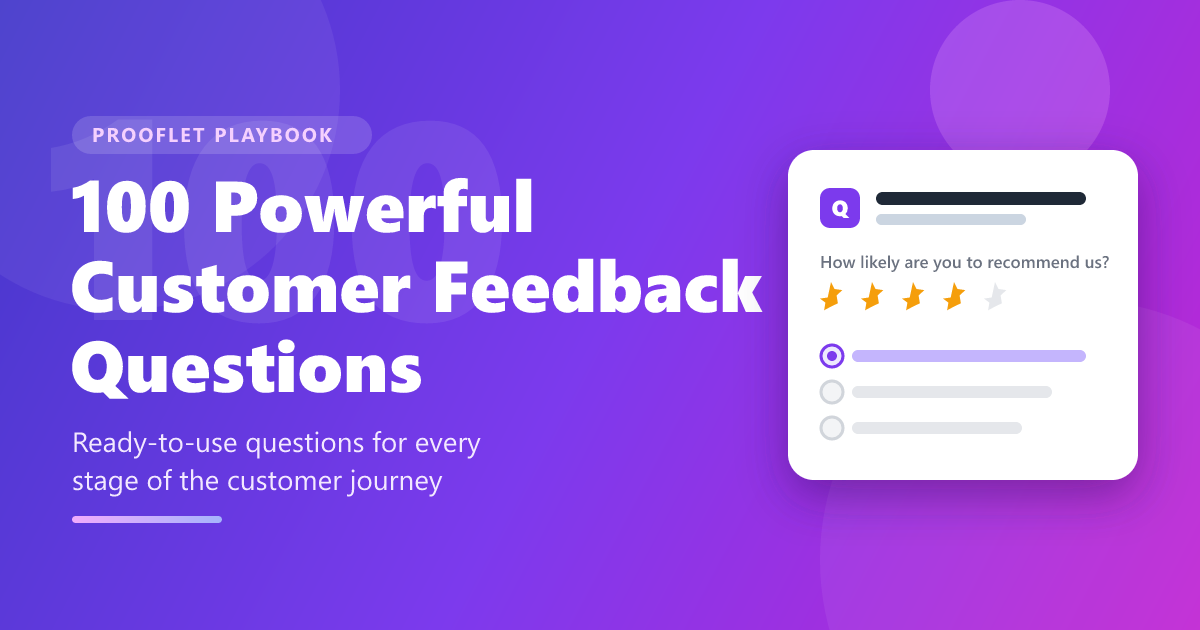
100 Powerful Customer Feedback Questions
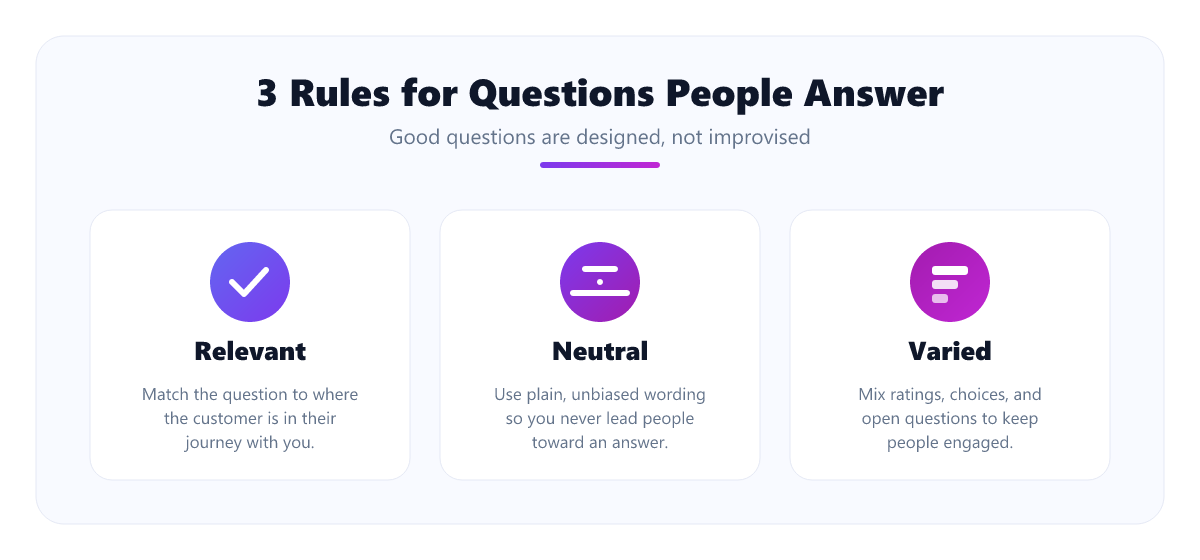
The right question turns a quiet customer into a goldmine of insight. Here are 100 customer feedback questions organized by stage, plus how to ask them well.
Testimonial: Definition, Meaning and 8 Types
A testimonial is a statement from a customer describing their experience with a product or service, given directly to the business and published with permission. Definition, the 8 types, and examples.

13 Testimonial Request Templates: Email, SMS, Slack and In-App (2026)
13 testimonial request templates across email, SMS, Slack, in-app, post-purchase and QR codes, with the subject lines and timing that get replies.

25 Testimonial Questions to Ask Your Clients
Here’s the thing about asking customers for testimonials: most of them want to help. The problem is, when you say…

How to Ask for Testimonials (Without Being Awkward)
Learn how to ask for testimonials without feeling awkward using simple, proven strategies that help you collect authentic feedback, build trust, and boost conversions effortlessly.

Senja vs Testimonial.to vs Famewall: Which Is Best in 2026?
Choosing between Senja, Testimonial.to, and Famewall for collecting and displaying testimonials means comparing three popular platforms with different strengths, pricing…
Start Collecting Testimonials Today
Try the demo. Buy when you're ready. 7-day money-back guarantee.